

Reforms
One of the first questions people ask us is, What reforms do you have in mind? We think the real answer lies with you, the people. But here are some mix-and-match ideas to spur the conversation.
How to read the charts
Each section below shows one piece of how California government works today, and one way it could work instead. Individual elements can be mixed and matched, and percentages tweaked - or maybe you have your own ideas to share.
Final reforms should be developed and evaluated through a deliberative process whose participants reflect Californians’ diverse experiences and perspectives.
Legislative constitutional amendments
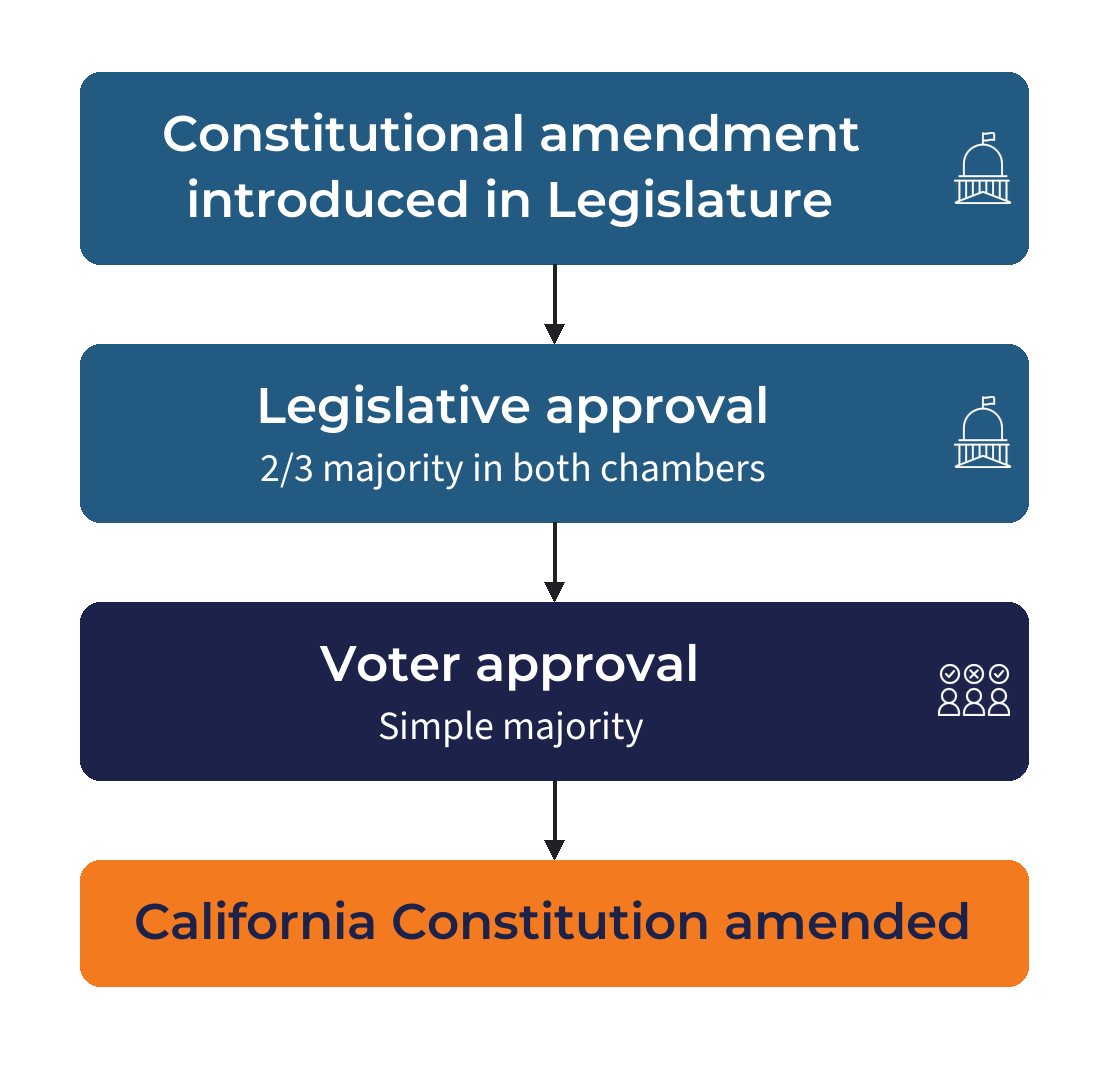
Today’s process
All amendments go to the ballot. Constitutional conventions are also
permitted for fundamental revisions.
Alternative process
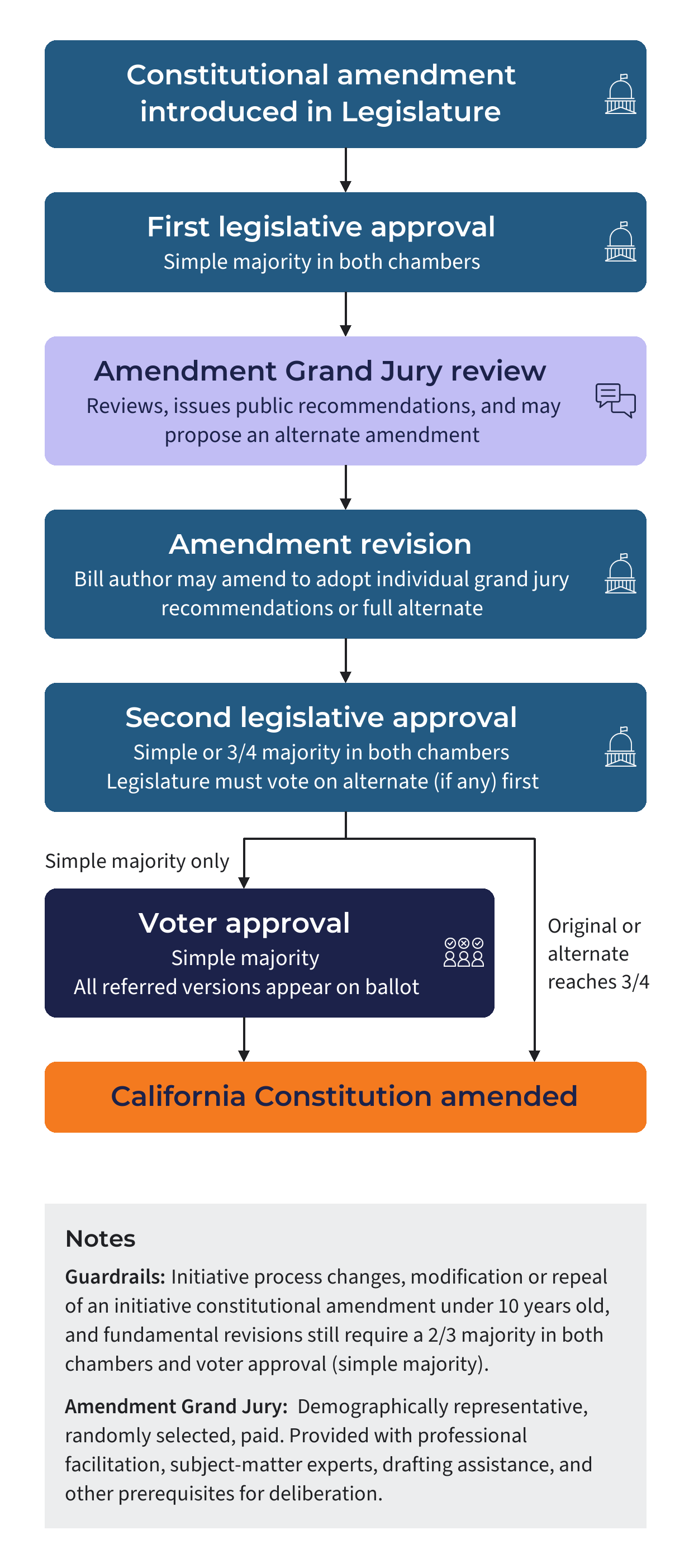
A ballot bypass lets technical fixes and high-consensus amendments stop cluttering our ballots. Independent review serves as a legislative check. The supermajority to refer amendments to voters is replaced with a second simple majority vote, after public review.
Ballot initiatives
Four in five voters support the existence of initiatives and nine in ten say they bring up important yet inadequately addressed issues. Yet nine in ten also say ballot wording is often too complicated and confusing. Eight in ten agree there are too many propositions on the 2026 ballot. Campaigns regularly spend over $100 million.
Today’s process
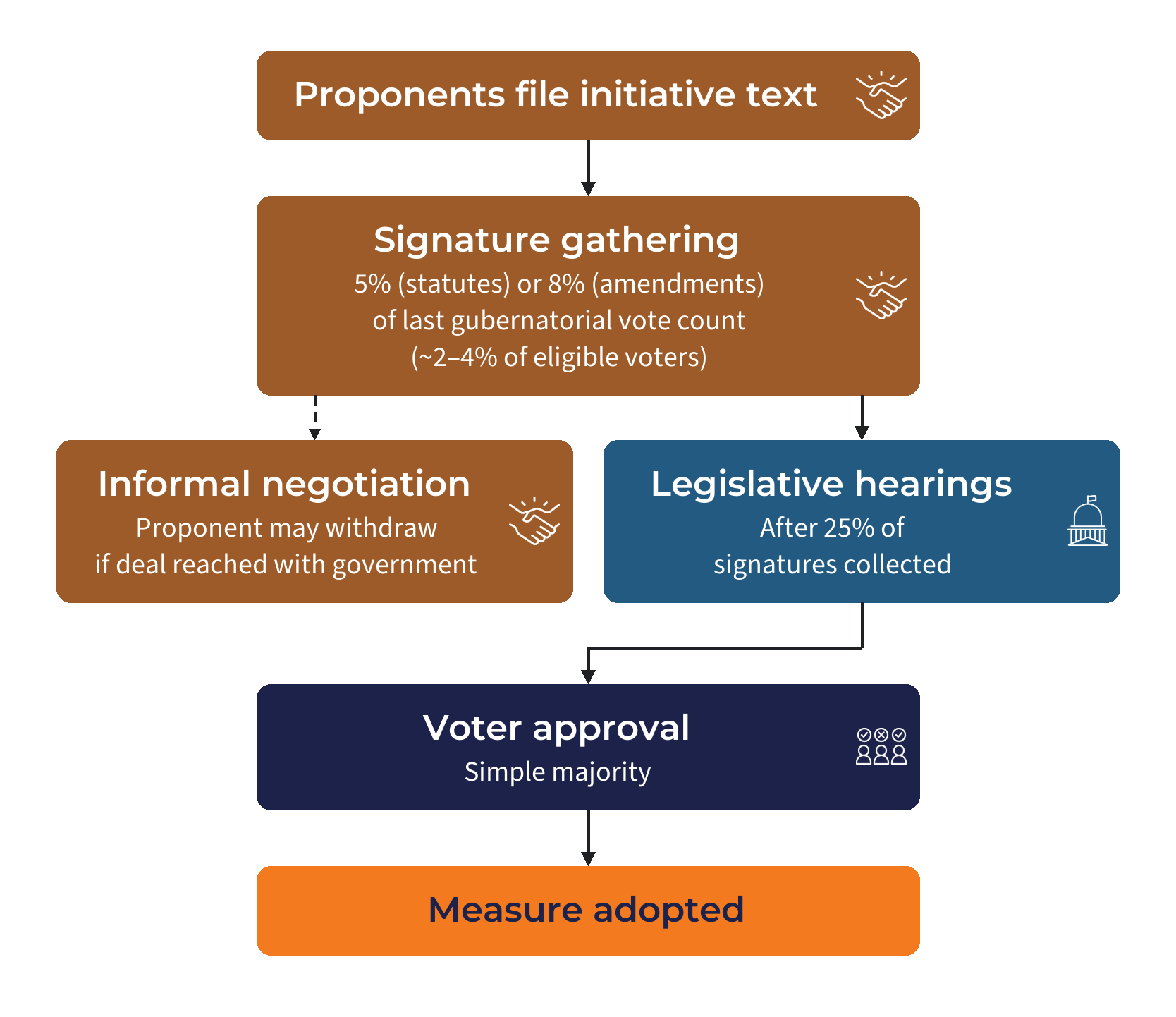
The very first step is proponents filing the final initiative text.
The number of signatures needed to reach the ballot depends on whether the last Governor’s race was competitive and high-turnout. In 2026, nine initiatives made it onto the ballot.
No action is taken in the legislative hearings. Negotiation happens behind closed doors.
All measures can pass with a 50%-plus-one majority, including both ordinary law (statutes) and constitutional amendments.
Alternative process
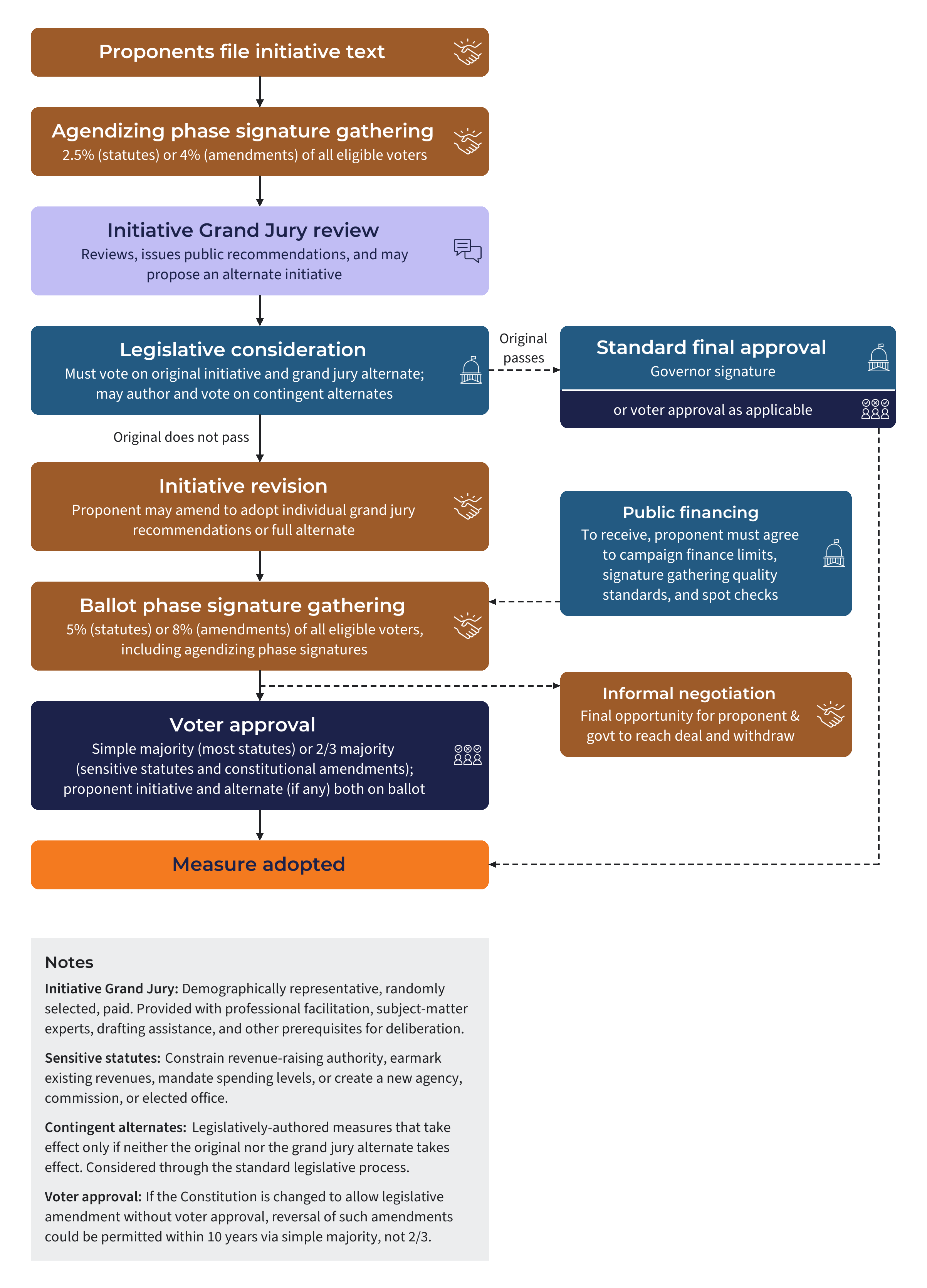
This scenario splits signatures into two rounds. The first puts a measure on the Legislature’s agenda. The second round puts it on the ballot.
The number of signatures required is based on voting-eligible population. Public financing is available for the second round on a voluntary basis, subject to campaign finance limits and quality standards such as signature gatherer training and provision of accurate measure information.
An Initiative Grand Jury reviews the measure. It issues recommendations and may draft an alternate ballot measure. Proponents may revise their measure in response.
Sensitive statutes and constitutional amendments are subject to higher voter approval thresholds.
Revisiting past initiative statute
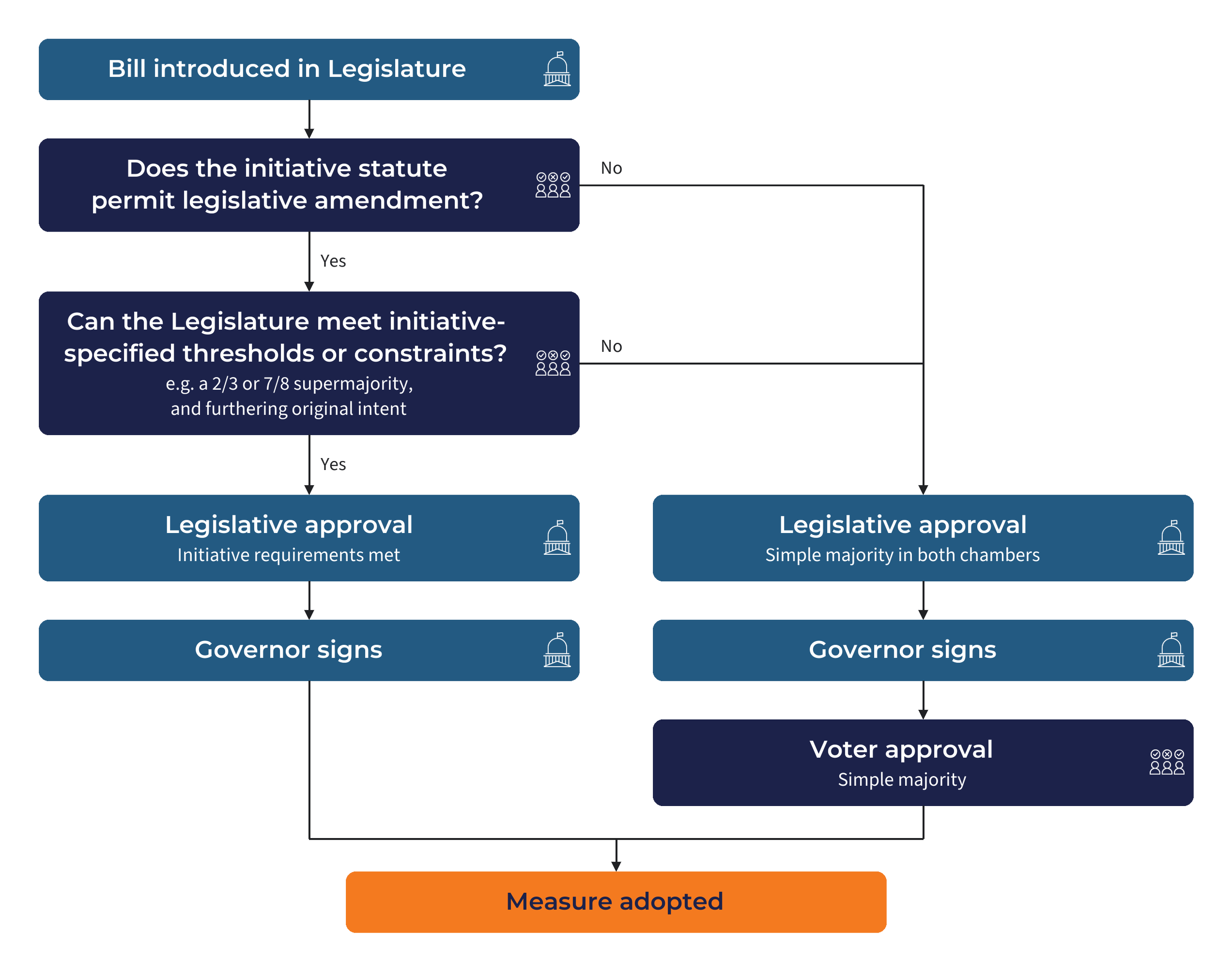
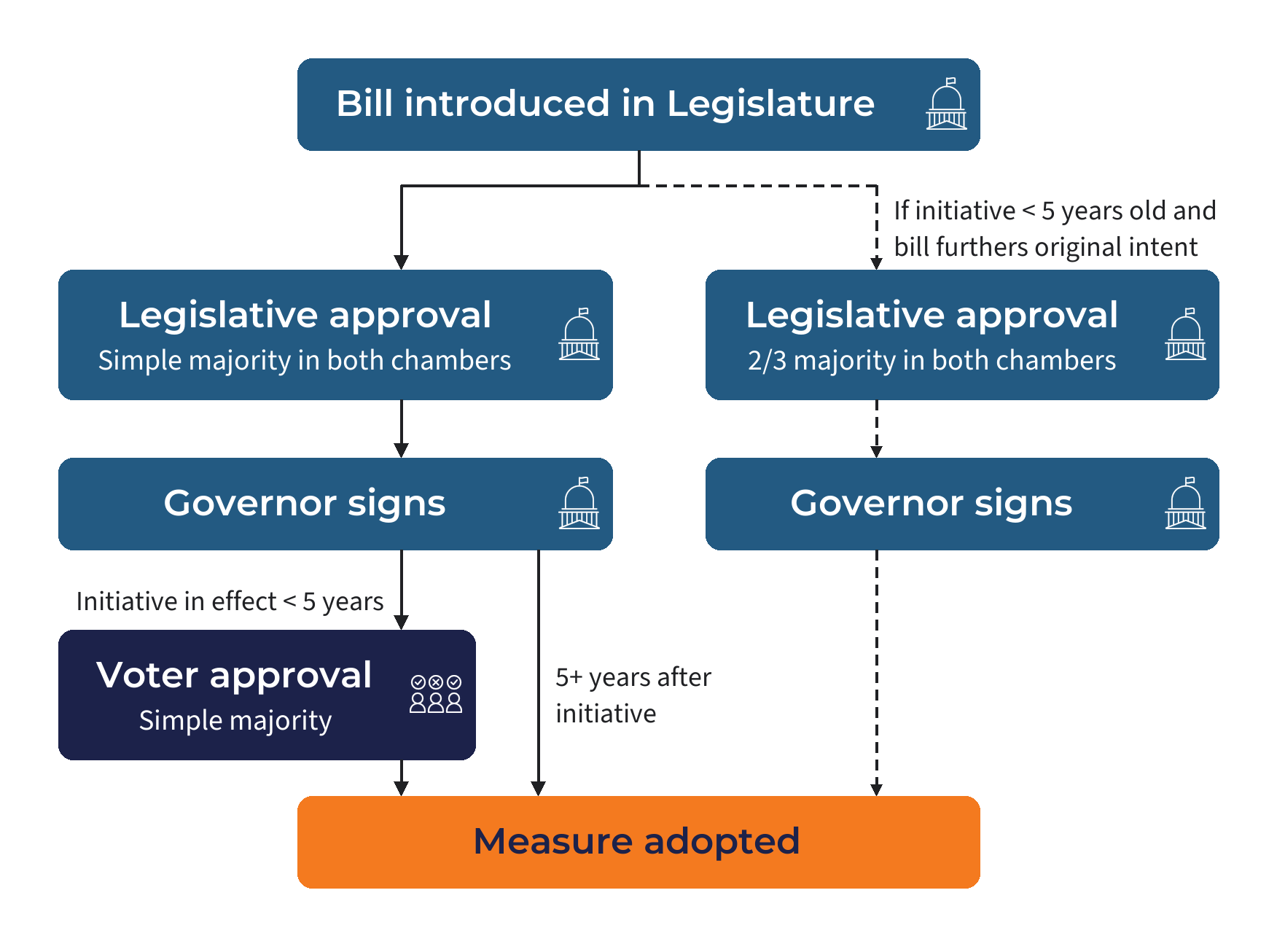
Did you know? Ordinary laws passed via initiative can write their own rules for legislative amendment or repeal. Unsurprisingly, proponents often make initiative statute nearly as locked in as constitutional law.
The alternative scenario offers standardized protections for five years and thereafter treats initiative statute just like regular law.
Today’s process
Alternative process
Consolidated statewide elections
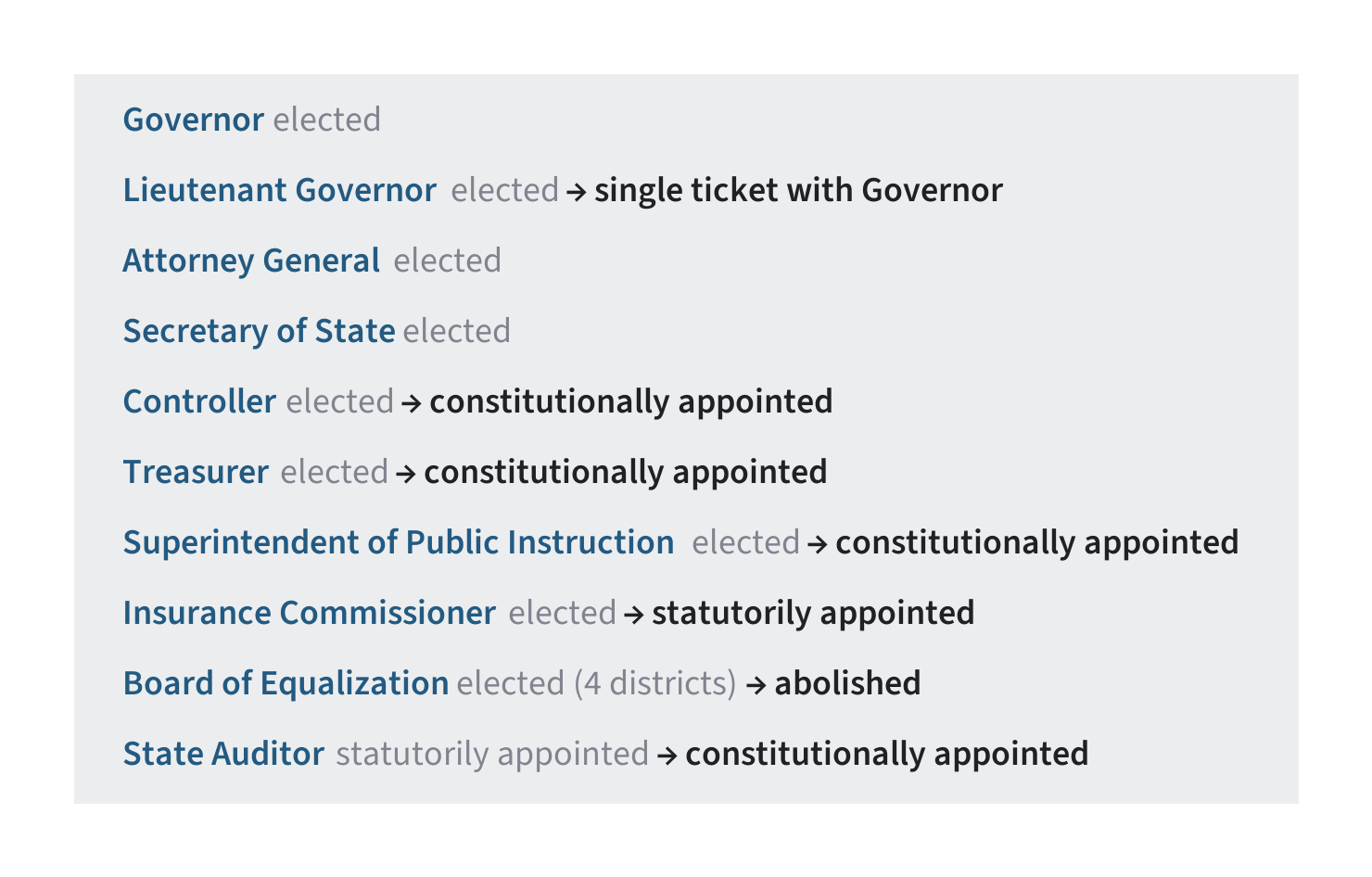
What makes a good State Treasurer? Is there a reason the Governor couldn’t appoint them?
Elections to specialized office clutter our ballots and disempower the Governor. Maybe we could drop some, while keeping elected or constitutionally protected watchdogs.
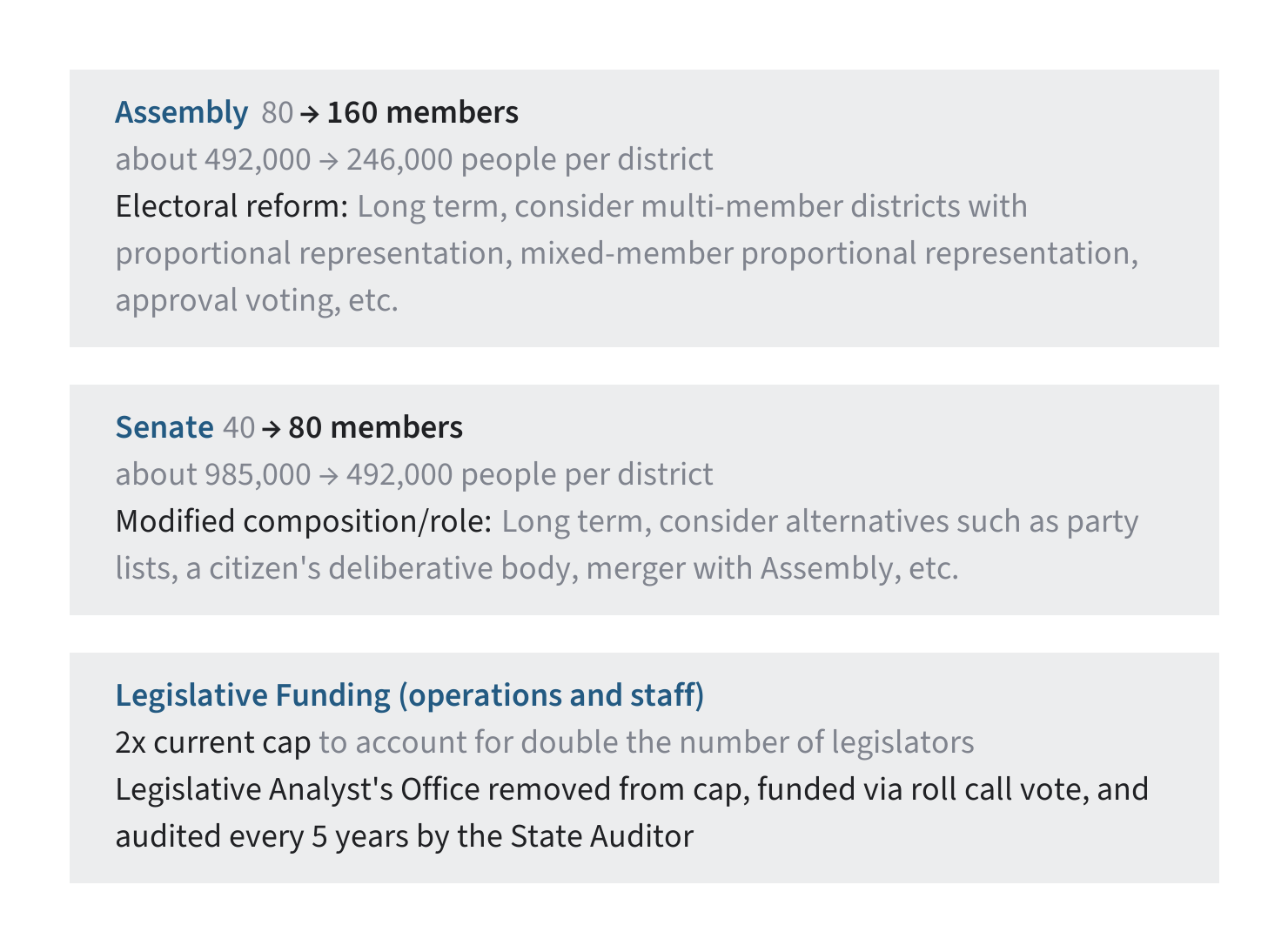
Accountable, empowered Legislature
State Senators have more constituents than U.S. Congressional Representatives. Smaller districts might lead to more accessible, responsive officials — and campaigns with a lower barrier to entry.
Once in office, our elected representatives need the budget and staff support to be effective and independent.
Longer term, California could consider bigger changes to make sure that our Assembly and Senate truly give a voice to every Californian, not just to those who vote in the majority.
Join the conversation